Past event — This event ended 5 days ago.
Canada: Independence
About the event
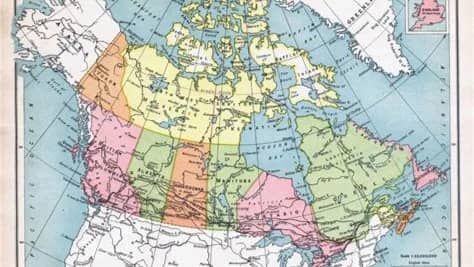
In the five years after John A. Macdonald's death, the federal Conservative Party went through four leaders and faced a difficult crisis over French-language schools in Manitoba. Quebec Liberal Wilfrid Laurier was elected in 1896 and remained Prime Minister for 15 years. By this time Canada was filling out: Saskatchewan and Alberta became provinces in 1905, and in 1912 the 60th parallel of latitude became the North West Territories' southern border. (In 1898, as a result of the Klondike Gold Rush, the Yukon north of British Columbia became a second territory.)
Canadian industry continued to develop, though Canada's most important exports remained unprocessed goods such as wheat and timber. Immigration continued to surge, including many Ukrainians, but Chinese and East Indian immigration still faced stiff resistance. There were also emigrants: New England's factories attracted many French-Canadian workers. Laurier's attempt to establish free trade with the United States was ended when he lost the 1911 election to Conservative Robert Borden.
Canada originally deferred to the British government on foreign policy and defence, but this started to change. Canada's first External Affairs Minister was appointed in 1909, a position taken by the Prime Minister for most of the pre-1945 period. At the turn of the century Canadians had joined the British to fight in the Boer War, and in 1904 Canada's militia was put under a Canadian commander, with the last British units leaving in 1906. (Newfoundland also became a dominion in 1907.)
World War I broke out in 1914, transforming Canada. A total of 620,000 Canadians fought in Europe and 67,000 were killed. (The Royal Newfoundland Regiment was annihilated at the start of the 1916 Battle of the Somme.) The 1917 introduction of conscription was unpopular in Quebec, where many French-Canadians were unenthusiastic about what they saw as a British war. (Most Ukrainian-Canadians had emigrated from the Austro-Hungarian Empire, now a wartime enemy, and many were subjected to mass internment.) But Canadian troops would distinguish themselves in the Battle of Vimy Ridge and the war's final 100 days. The war led to greater British recognition of their dominions' independence, culminating in legal autonomy under the 1931 Statute of Westminster.
Deep changes were already visible in 1918. Women, who'd replaced men in many jobs, were granted the vote by the federal government in 1918. (But Quebec women wouldn't get to vote in provincial elections until the 1940s.) Prohibition, a wartime measure, continued after the Armistice--except in Quebec--but was largely repealed by 1927. Another wartime measure, daylight savings time, became permanent. The federal government merged five bankrupt lines to create the nationwide Canadian National Railway, incorporated in 1919.
And new political movements were appearing. Left-wing activity culminated in the Winnipeg General Strike of 1919. The United Farmers won provincial elections in Ontario and Alberta. In the 1921 election, which put Mackenzie King's Liberals back in power, the western-based Progressive Party elected more MPs than the Conservative Party, though they weren't coherent enough to form an Official Opposition.
Our discussion will touch on: The Klondike Gold Rush. Proposals for free trade. The beginnings of Canada's national identity. Wartime industrial development. The changing role of women. Postwar politics.
A weekly discussion on a history topic. We'll meet at Yorkville Village food court, at the round table near the west entrance.