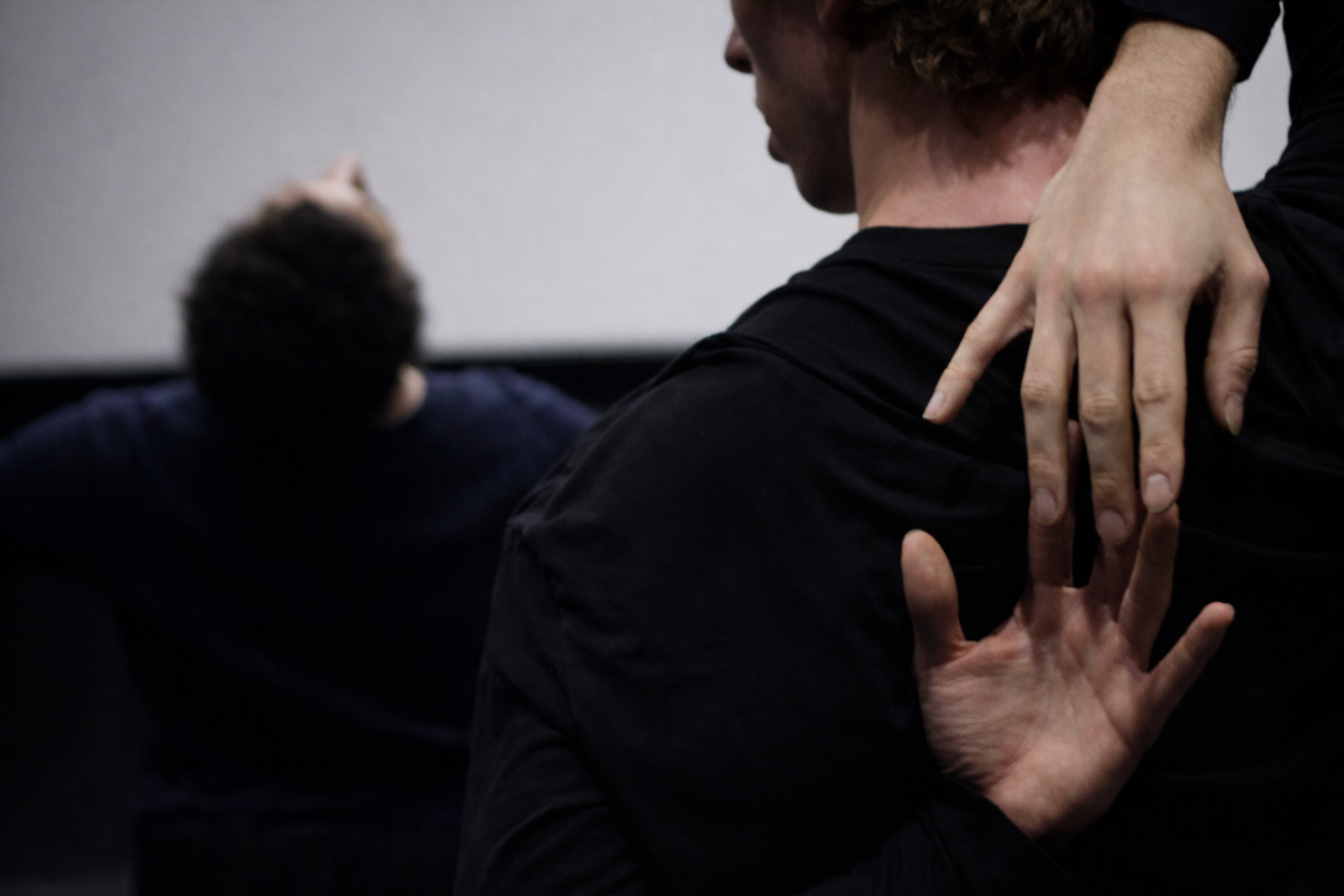
Giacomo Luci, an artist whose research moves between dance, thought, and scenographic writing, constructs with La Lalangue a work that delves into the less domesticated zones of language and the body. Inspired by Roland Barthes’ reading of Rasch on Robert Schumann’s Kreisleriana cycle, the creation does not seek a choreographic translation of the text, but rather inhabits its internal tension: the fracture where language ceases to be code and returns to being matter, impulse, vibration. Rather than an exploration of meaning, La Lalangue moves in proximity to what precedes articulation: a pre-individual, affective, and pulsional territory in which the body does not represent but reacts, allows itself to be traversed, enters into crisis. What emerges is a writing that disrupts choreographic codes to let rhythm, jouissance, and deviation surface, as if dance were seeking not a form, but the point where form begins to undo itself.