Anthropology vs Free Market or The Dawn of Wall Street
About the event
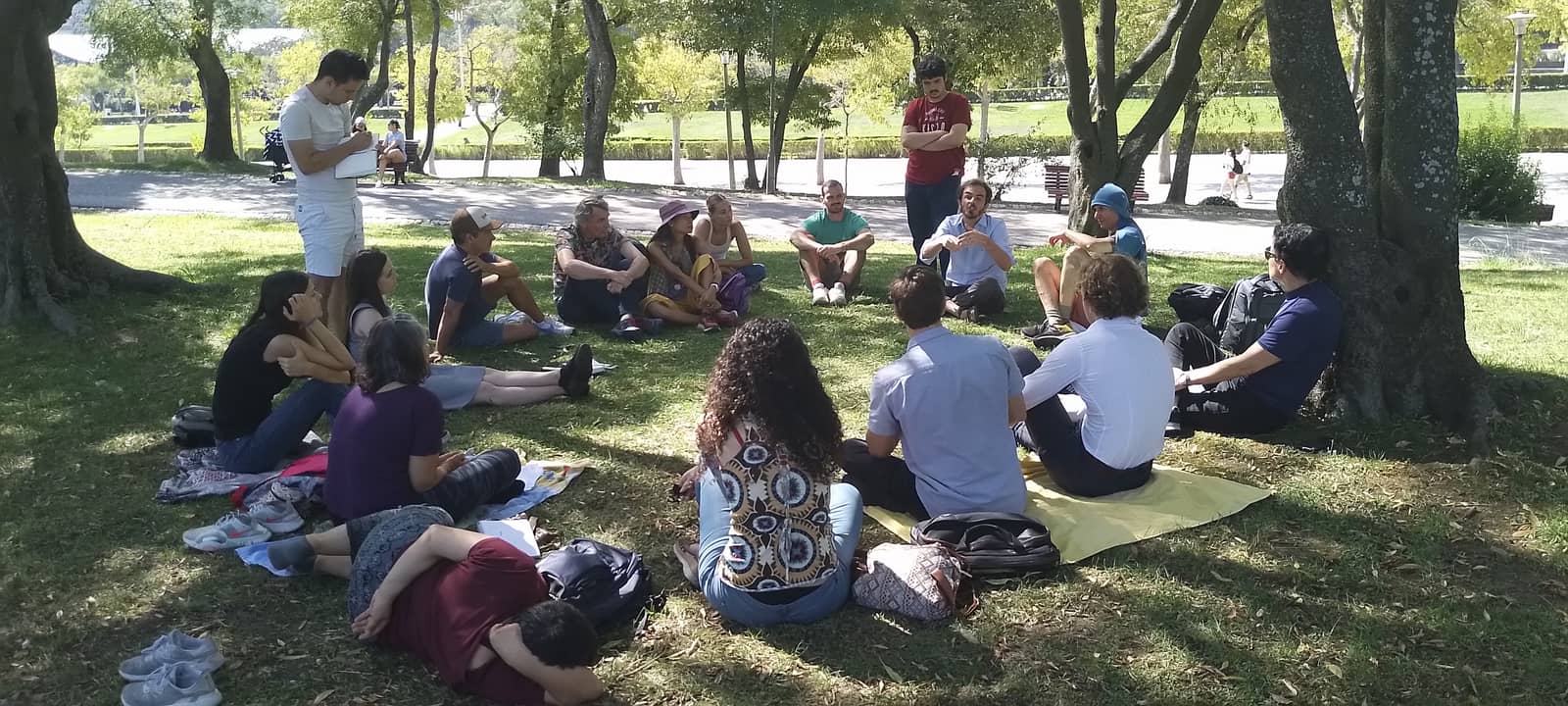
ENJOY PHILOSOPHY MEETS WEEKLY EVERY SUNDAY BETWEEN 11.30 AND 14.30 AT EDUARDO VII PARK, HERE:** [https://goo.gl/maps/5e3jKFEweXkNvDdK6](https://goo.gl/maps/5e3jKFEweXkNvDdK6)
ITS THE GARDEN BETWEEN THE “CARLOS LOPES PAVILLION” AND THE “PRAIA NO PARQUE” RESTAURANT AT EDUARDO VII PARK.
THIS IS A GROUP FOR ANYONE INTERESTED IN ENJOYING PHILOSOPHY.
NO PRIOR KNOWLEDGE IS REQUIRED.
ONLY ETERNAL CURIOSITY AND THE PLEASURE OF KNOWLEDGE.
PLS KEEP UPDATED of any changes and updates on our WhatsApp Group:
[Enjoy Philosophy Lisboa Group Access Link](https://chat.whatsapp.com/GYP2kvajg8j3BGejCd8xVm?mode=gi_t)
We will learn, debate, enjoy and investigate philosophers and diverse themes from the philosophical perspective. Each reunion is structured as a conversation among all attendees about that day s philosopher softly moderated by the organizer. The conversation will kick-off from the very brief suggested reading providing easy access to all attendees both to the philosopher and the conversation.
Let´s be greek and dive today on…
Anthropology vs. Free Market: the unexpected battle fought at the heart of some of our most fundamental beliefs throughout the 20th century by some arrogant newcomers to the millennia-old philosophical debate: Anthropologists.
Since *The Wealth of Nations* (1776), Adam Smith's famous claim that humans have a “propensity to truck, barter, and exchange one thing for another”, classical and neoclassical economics progressively conceived the individual as a rational economic actor: someone with preferences who chooses between alternatives under conditions of scarcity and seeks to maximize utility.
In much simpler terms, a Free Market actor.
Sell as high as you can. Buy as low as you can. Profit.
And this, economically speaking, is what a human being essentially IS.
Then anthropology started talking... And backing their words with facts.
In 1925, French anthropologist Marcel Mauss exposed in *The Gift*, that exchange in many societies cannot be reduced to buying and selling: Gifts create obligations, relationships, social bonds: to give, to receive and to reciprocate. Exchange is not merely economic; reciprocity itself creates and maintains the social relationship.
Hungarian sociologist Karl Polanyi took it further to show that, for much of human history, economic activity was inseparable from kinship, politics, religion, community. Economy was embedded in society. Modern self-regulating market conception attempts something historically extraordinary: instead of the economy being embedded in society, society increasingly becoming subjected to the logic of the market.
Close to hour days, economic anthropologist David Graeber showed that no ethnographic studies have ever found an early society or tribe that relied primarily on barter for everyday transactions: money did not naturally emerged as solution to the inconveniences of barter between self-interested individuals. A bloody history of credit and debt relations preceded coinage and probably preceded widespread impersonal barter, and money started accounting for those debts.
Living contemporary anthropologists such as Susana Narotzky and Niko Besnier bring the argument directly into our world, They examine how ordinary people make a living on our current societies, particularly under conditions of crisis, where nets of solidarity, reciprocity and mutual care appear as immanent human economic structures emmerging when and where everything else, specially the market, fails. Economic life is much more than maximizing profit even inside highly developed market economies, and therefore, human life cannot be reduced to market profit logic.
Anthropology, as some of the best philosophy of the 20th century, brought us some very good news. We chose, we choose, sometimes, something else. We were, we are, we might be, also, something else...
Let´s think with anthropologists about the Human being living inside us, a far more compelling creature than an…