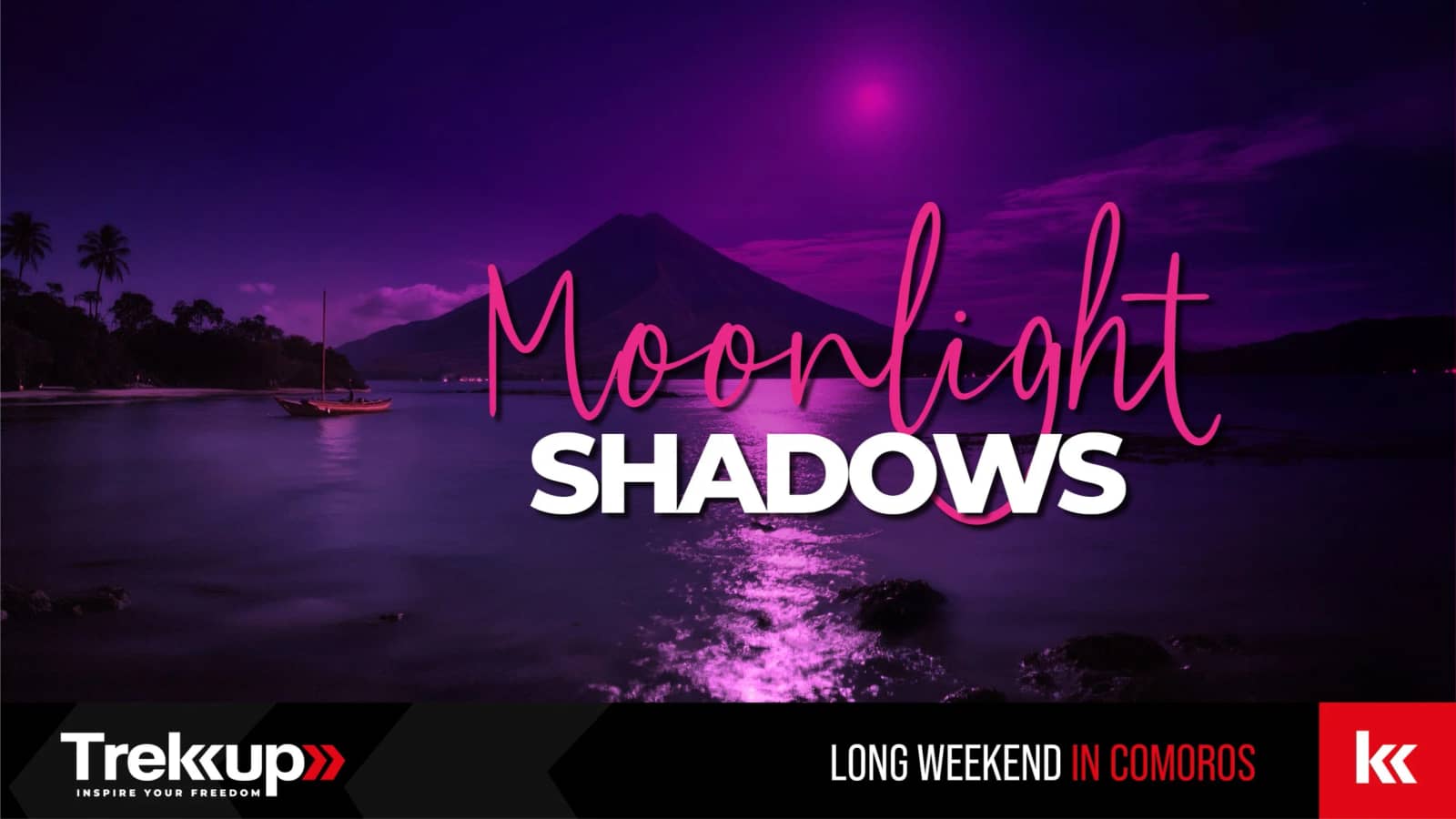
Moonlight Shadows | Long Weekend in Comoros
About the event
The Islands of the Moon, Comoros, are a small cluster of volcanic isles drifting between Africa and Madagascar, blending African and Arab cultures with a French accent.
The name "Comoros" comes from the Arabic word Qamar, meaning moon, a name given by old sailors who saw something magical in these shores. And in many ways, the moon still fits in a distant, beautiful reference, that’s always pulling the tides and the past together. Their flag proudly flies four stars, even though only three of the islands are truly part of the country today. The fourth star belongs to Mayotte, which chose to stay with France after independence in 1975, despite the rest of the islands voting to break away. Still, Comoros keeps Mayotte on the flag, not just out of habit, but out of hope, memory, and maybe a little stubbornness too.
The four islands of the Comoros are home to 500 plant species, 21 bird species, 9 reptile species, and 2 species of fruit bats that are found only in this archipelago. However, deforestation has caused significant changes to the landscape and threatens the survival of these rare plant and animal species. The Comoros are reminiscent of Madagascar. Most of the species found in the Comoros are related to those from the "eighth continent" (Madagascar) and Africa. A small number also originate from Asia.
The archipelago was formed by volcanic activity. The oldest island is Mayotte, and the youngest is Grande Comore. It is on this last island that eruptions of the Karthala volcano (over 2,300 masl) still occur. Today Comoros enjoy their independence to the full extent. Since gaining independence, the islands have changed hands many times, experiencing over 20 coups, more than the number of years under stable governance. It has rightfully earned the nickname “the Coup Capital of the World.”
Country has zero traffic lights and roads are so chill and bumpy that no one bothers. Locals say, "We have goats and patience instead." Thanks to vast ylang-ylang plantations, parts of the islands literally smell like perfume., the air is often scented with flowers and yes, people do stop and sniff the air. In fact, this cousin of custard apple with yellowish flowers is a key ingredient in luxury perfumes, ie. Channel no. 5. Although the plant came to the Comoros from the much larger Indonesia, it is the African country that is the largest producer of ylang-ylang oil, an important ingredient in many perfumes. The Comoros is also the second largest producer of vanilla in the world.
Despite being a sovereign nation, the Comorian franc is still tied to the euro and printed in France. However, in rural areas, vanilla and cloves are so valuable they’re sometimes used in bartering.
The Livingstone’s fruit bat and Comoros drongo are among the national wildlife symbols. Bat curry is still a local delicacy in some villages. They're fruit bats, and apparently... "tastes like chicken,"
But in a background, it is still an untouched tropical paradise where volcanic peaks meet coral reefs, ancient Islamic culture shapes daily life with a quiet rhythm of tradition and hospitality. Spice-scented beachside villages with sacred mosques blend seamlessly with passing sea turtles and whales, all moving to the gentle rhythm of island time. Inshallah, it could be your perfect off-the-beaten-path adventure: raw, real, and refreshingly undiscovered.
Let’s go!
Day 1 // Grande Comore: The Historic Town
Arrival to Moroni International, immigration and check–in to our beach side hotel.
After short refreshment head out to discover the historic town of Itsandra. Once the beating heart of Swahili civilization on the island of Ngazidja (Grande Comore), Itsandra has roots stretching back to the 14th century. It was once the capital of the island and its first seaport, a hub where merchants and travelers converged. Today, remnants of this vibrant past still linger. The fortress of the 17th century, once linked to the city by a walled corridor, stands proudly,…