Past event — This event ended 18 days ago.
No Free Lunches: Why Physics Still Matters in an AI-Driven Drug Discovery World
About the event
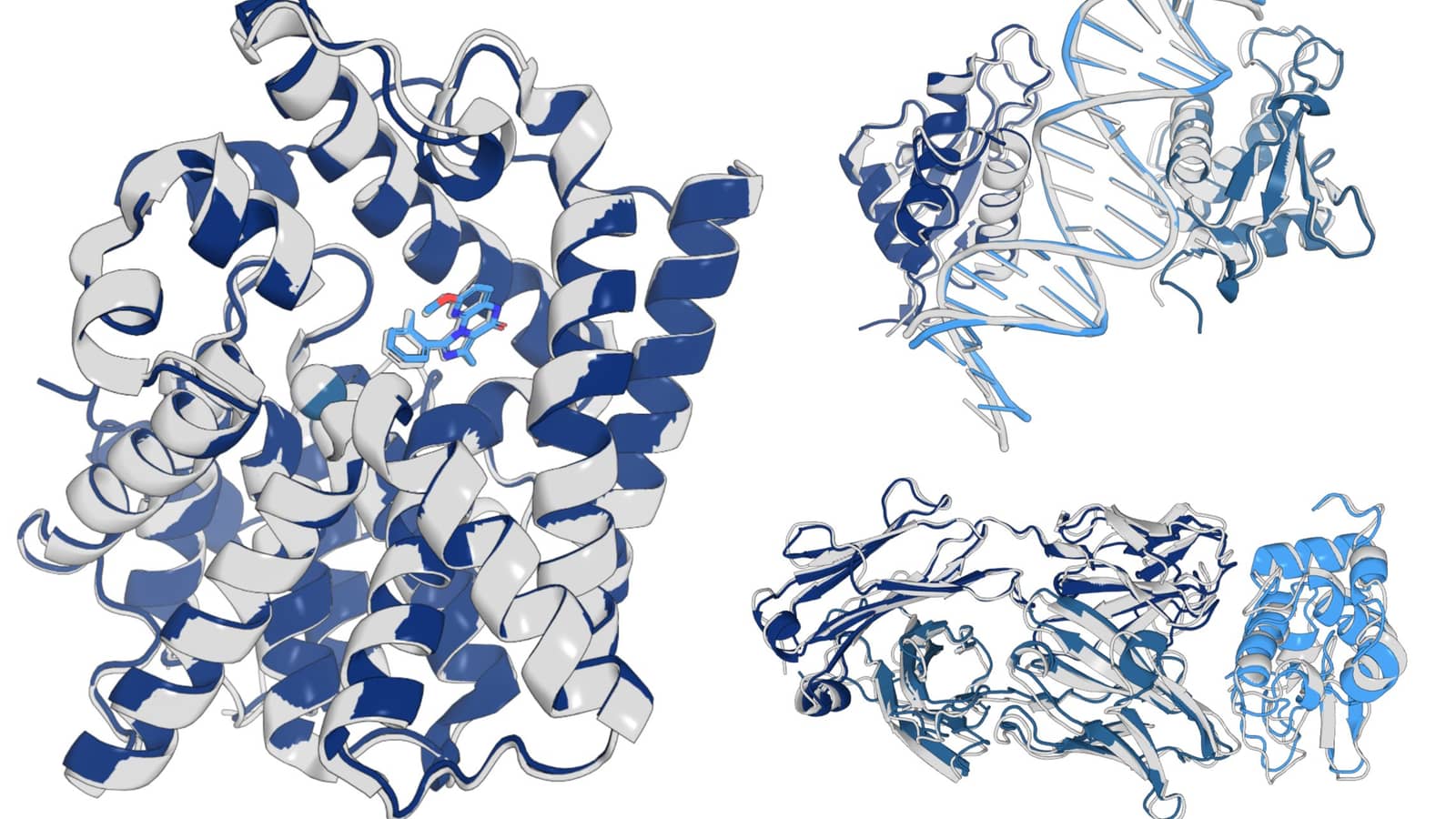
AI is everywhere in drug discovery — platform companies promise it can replace a considerable share of the discovery process, and established discovery companies promise more molecules, faster. Much of this is genuinely intriguing, and some of it will win. But every AI approach is fundamentally bounded by the training data it learns from, and that boundary quietly limits scope in ways that are easy to overlook in the current enthusiasm. Physics-based methods have never promised something for nothing — but they remain essential for filling exactly the gaps that data-driven approaches cannot see.
👉 Join NYAGIM for our 2026 Q3 event to connect with the local computational chemistry and informatics community.
David Pearlman Biography David Pearlman is a computational chemist with over forty years of experience in academic research, drug discovery, and software development. He earned his Ph.D. in Chemistry from UC Berkeley, completed a postdoctoral fellowship in Peter Kollman's lab at UCSF, and became a founding employee at Biosym Technologies, where he led development of the first commercialized structure-based drug design platform. He later worked at Vertex Pharmaceuticals and built and led the BioLuminate biologics software platform at Schrödinger, Inc. Dr. Pearlman was also a first author and principal developer of the widely used AMBER program, publishing extensively on free energy perturbation, ligand scoring, and protein modeling. He writes about drug discovery and computation at [ahalflife.substack.com](http://ahalflife.substack.com/), and is currently Vice President of Product at QSimulate, advancing GPU-accelerated QM/MM integration into production-scale drug discovery workflows.
Location
NYU Silver Building Check at the desk for Room number 32 Waverly Place (just east of Washington Square Park)
Open in Maps