Past event — This event ended 45 days ago.
Exhibition 'The medieval garden of the monastery'
About the event
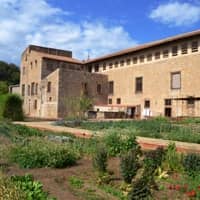
L' Hort Petit del Monestir , as the nuns call it, is a walled enclosure of almost 3,000 square metres of cultivated land, located on the southern façade of the monastic complex, opposite the Sala de les Procures, the space where the harvest was stored. From this not-so-small garden, the nuns obtained some of the vegetables, legumes and fruits they cooked, as well as the herbs used to prepare medicines for the community, from the foundation of the convent in 1327 until the late twentieth century. In 2017, the Monastery Museum launched a project to restore the original use of this space, with the aim of reconstructing a four-plot garden as it might have existed during the Middle Ages. For this reason, it does not include species that arrived in Europe from the Americas after 1492. To gain the most accurate understanding possible of what a medieval garden would have been like, a multidisciplinary team was formed, bringing together specialists in history, archaeology, botany, archaeobiology, architecture, museography, environmental education and social services, who approached the project from multiple perspectives. The archaeological intervention carried out at the start of the works made it possible to document five clearly defined chronological phases of use of the space, dating from the fourteenth to the nineteenth centuries. Thanks to this study, historical paths and traditional irrigation systems were recovered beneath the garden soil. Drawing on all this knowledge, the design of the space and its various museographic elements was developed, along with the layout of the plots, ensuring a balance between the green area, the architectural and historical structure of the monastery, and the museum display. Restoring the garden from a historical perspective required an exhaustive study to determine which species should be planted. To this end, medieval documents preserved in the Monastery’s own archive were consulted, along with agricultural treatises from the period t