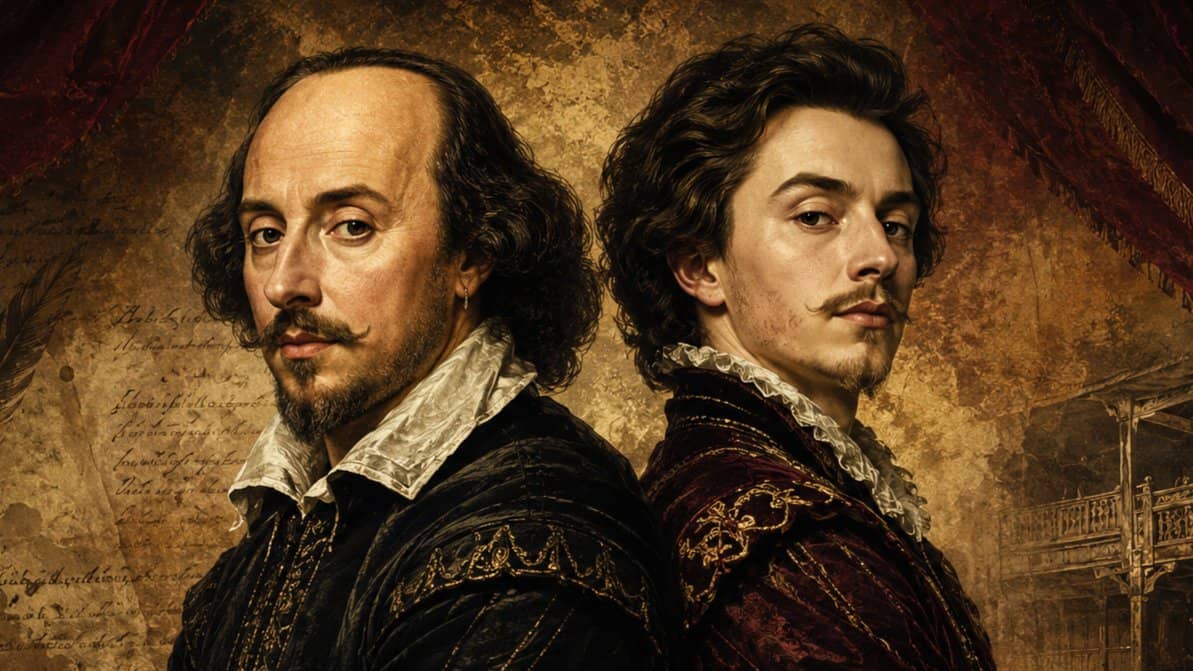
Shakespeare and Marlowe: Henry V (Play discussion)
About the event
Dear members,
In November and December, we will continue our exploration of Shakespeare in conversation with Christopher Marlowe through *Henry V* and *Tamburlaine*, two plays deeply concerned with performance and the consequences of power. At the centre of both works stand extraordinary rulers whose authority depends not only on military success, but on their ability to command loyalty, shape language, and create a compelling image of themselves. Henry and Tamburlaine invite us to ask what makes a leader legitimate, charismatic, dangerous—or great. Reading the plays together, we will consider how Shakespeare and Marlowe examine ambition, conquest, kingship, violence, national identity, masculinity, rhetoric, and the relationship between power and morality. Both playwrights are fascinated by men who transform themselves through action and language, yet they ask very different questions about the price of that transformation. Where Marlowe revels in the sheer force of ambition, Shakespeare often complicates triumph with doubt. Hope you can make it! Maryama Antoine
Synopsis After an insult from the French Dauphin, King Henry V of England invades France to claim the throne he believes should be his. Henry stops an assassination plot, gives powerful speeches, and wins battles against the odds. In the end, he woos and marries the Princess of France, linking the two nations.
Henry V follows the events of Henry IV Part 2, after Prince Hal is crowned. A Chorus introduces the play and celebrates the life of England's King Henry V. Henry himself seeks for evidence of his right to rule over France. The Archbishop explains land laws to the King and his court. Then an ambassador arrives from the French King's son, the Dauphin, with a gift of tennis balls to humiliate Henry. His response to this challenge is to set in motion the invasion of France... Sources Shakespeare was sure of a popular success in taking Henry V as his subject. We know of three other plays about the great military hero already in circulation in late 1580s and early 1590s. The existence of two of these is known only on the strength of brief contemporary references but the text of the third has survived and its anonymous title page announces its subject:'*The Famous Victories of Henry the fifth: Containing the Honourable Battell of Agin-court:* As it was plaide by the Queenes Maiesties Players. As with his other English history plays, Shakespeare drew closely on Raphael Holinshed's *Chronicles of England*, *Scotland and Ireland*, first printed in 1577 and revised and enlarged in 1587.
##