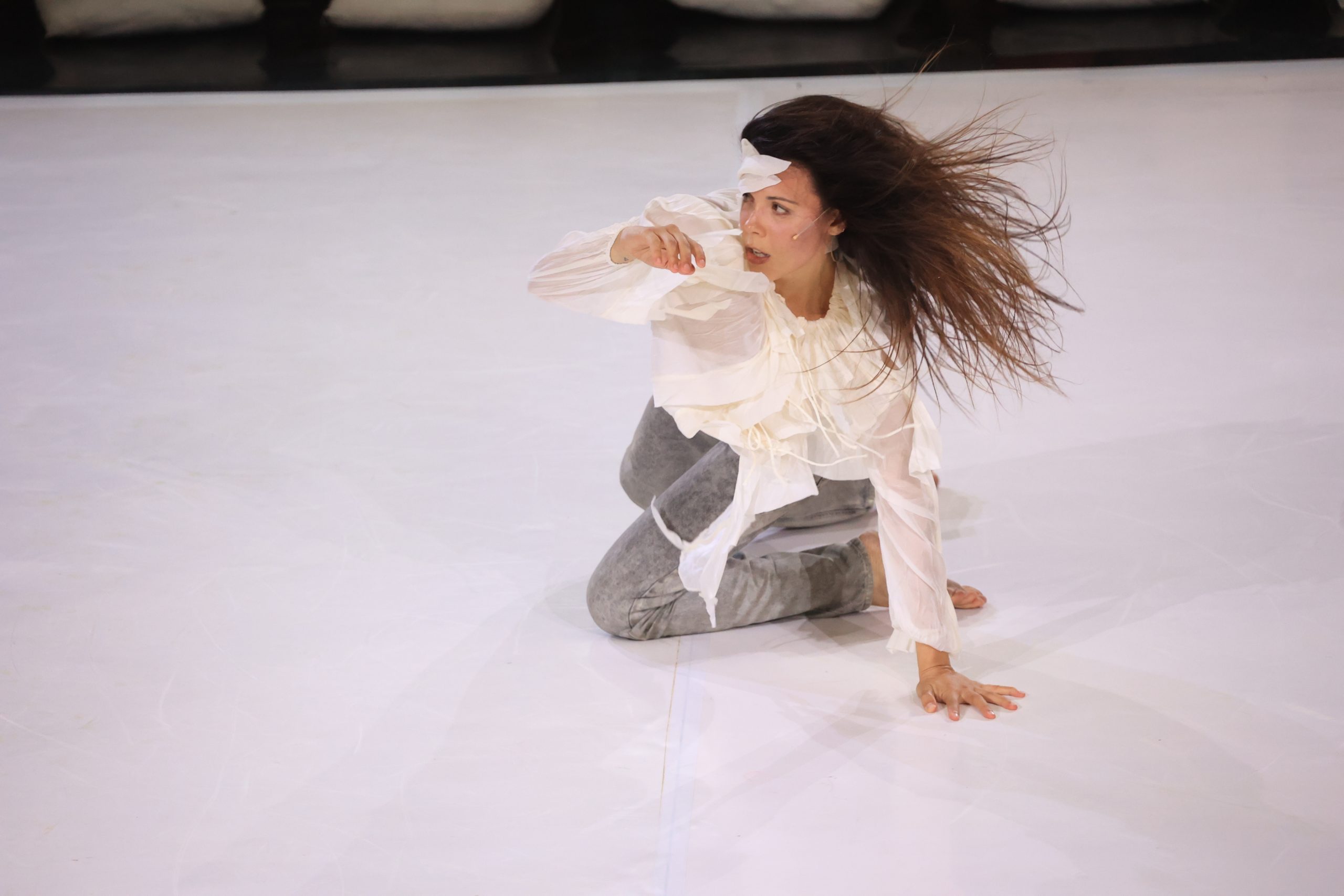
In Atto Bianco, dance, voice, and singing structure the action in a synergistic way, composing an homage to the maternal and to the “white act” of Romantic ballet. The work emerges from a personal experience of loss, which is transformed into choreographic and vocal material. Mourning is not approached as a narrative theme, but as a physical, temporal, and emotional state that permeates the body, altering its perception, rhythm, and presence. Traditionally associated with the representation of ethereal female figures suspended between life and death, the “white act” is here reactivated as a symbolic device through which to investigate the body as a site of memory.