Canada: Crisis
About the event
The Great Depression of the 1930s hit the Canadian economy especially hard, what with its dependence on unrefined exports. The Dust Bowl hit Saskatchewan farmers particularly hard. (High debt and low fish prices drove Newfoundland to bankruptcy, and its Dominion government was replaced by a Royal commission.) Conservative Prime Minister was a Hamlet figure much like his American counterpart Herbert Hoover: Hobo camps were nicknamed Hooverville in the USA, Bennettburg in Canada, and horse-drawn cars were "Hoover carriages" there, "Bennett buggies" here. Mackenzie King returned to power in 1935 with the slogan "King or Chaos, and his Liberals would govern Canada for over 50 of the next 63 years.
But new forces were emerging. (The Liberal vote was actually down from 1930, but declined less than the Conservative vote.) Canadian socialists created the Co-Operative Commonwealth Federation in 1932, led by J.S. Woodsworth. The Social Credit movement elected "Bible Bill" Aberhart Alberta premier in 1935, and won 17 federal seats that year in the western provinces. The Union Nationale's Maurice Duplessis and Liberal Mitchell Hepburn harnessed populism and were elected premier of Quebec and Ontario respectively. And there were extremist movements: communist leader Tim Buck's speeches attracted huge audiences, Adrien Arcand's Blue Shirts promoted fascism, and the Canadian Deutscher Bund promoted Nazism among German-Canadians.
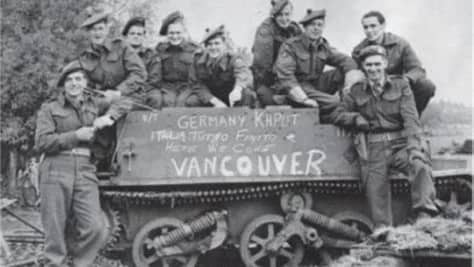
When the United Kingdom entered World War I, the Dominions had followed automatically. But when London declared war on Germany in 1939, each Parliament had to vote on it. Canada approved almost unanimously. Over a million Canadians served in this war--almost a tenth of the population--with almost 42,000 dead. As in the previous war, the issue of conscription divided the nation: in a 1942 referendum the Anglophone majority approved while most Francophones dissented. (Only 13,000 reservists were ultimately sent overseas.)
The Second World War transformed Canada again. Under Missions and Supply Minister C.D. Howe, Canada produced almost $10 billion worth of war materials. Like the U.S.A., Canada enjoyed huge economic growth without the infrastructure damage and civilian deaths in Europe and Asia. Over 800,000 women worked in the service and manufacturing sectors.
Our discussion will touch on: The widespread anger over poverty. Political extremism and populism. Currents of anti-Semitism. Wartime mobilization. Key Canadian battles. Wartime mass internment of B.C. Japanese-Canadians. The conscription crisis.
A weekly discussion on a history topic. We'll meet at Yorkville Village food court, at the round table near the west entrance.



![[In-person] Curiosity Café – Human Nature](/_next/image?url=https%3A%2F%2Fsecure.meetupstatic.com%2Fphotos%2Fevent%2Fb%2Ff%2F3%2Fd%2Fhighres_536268957.jpeg&w=1600&q=70)