Past event — This event ended 34 days ago.
Debate Night: Trespassing
About the event
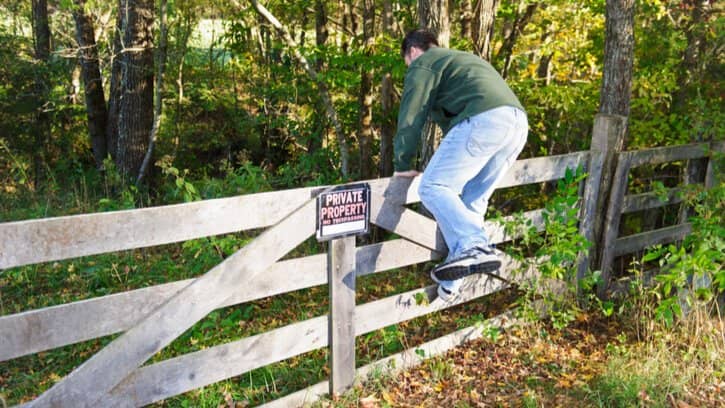
Trespassing is the act of going onto another person's land or property without their permission. In order to protect the security of individuals, their belongings, and their income sources, trespassing is illegal. These rules and regulations also make sense; you don't want someone entering your house at random, chilling out in your garden uninvited, or carousing with your livestock without you knowing what is happening. We all want a certain degree of privacy and security, and to control what goes on in our home and its vicinity.
However, the concept of private land can go very far. Most farmland, a large amount of forests and natural areas, and many paths between them, are all on private land. Sometimes this is the result of economic activity, such as farmland or grazing land for livestock. Sometimes this is the result of historical context, with land owned by families, often aristocrats, being passed down through the generations, and still in the hands of these same families. Sometimes both of these intertwine. This can create difficulty with public needs. Particularly outdoor activities, such as hiking, cycling, horseback riding, and river boating are negatively affected by patchwork land designation. This has led to political controversy, such as the Kinder Scout Mass Trespass in Northern England in 1932, where pro-hiking activists banded together to hike across private land to an area of natural beauty that was being blocked off by the private landowner.
Different countries have reacted in different ways to this issue. Some places have a general right to roam, which is the case in the Nordic countries, for example. Some places are very strict on private trespassing, but with larger amounts of public land, such as the United States. Other places do not have much legislation around this at all, and see large amounts of its natural beauty blocked off by fences and inaccessible paths. The question then comes up where we should draw the line. Nobody believes that you should be able to trespass wherever you want, but what do you do when trespassing laws benefit the few, usually rich, individuals, at the expense of the public at large?
This debate will follow a British Parliamentary format with eight debaters split into four teams of two.
Participants who wish to speak are highly encouraged to bring a paper and pen. You are welcome to participate even if you have no prior debating experience.
⚠️ Disclaimer: We aim for debates that are respectful, constructive, and welcoming. • Respect ideas and people: Listen actively, stay quiet while others speak, and debate arguments, not identities or beliefs. • Be concise and civil: Keep questions short and relevant; avoid hostility, hate speech, or discrimination. • Respect boundaries and time: No unwanted advances or suggestive behavior; arrive on time to avoid disrupting the debate. • Follow moderators: They guide the discussion and ensure fairness.