Past event
Sober Philosophy: Meritocracy (Bradley presents)
Registration with the organizer
Registration and any payment happen on the organizer's website.
Registration is not available here.
Found by Moments · Seattle Philosophy Club
Is this your event?About the event
From Google AI overview:
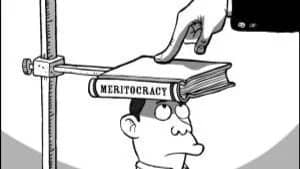
A meritocracy is a social, political, or organizational system in which people achieve success, power, or leadership roles based on their individual abilities, skills, and effort, rather than wealth, family connections, or social status. [[1](https://dictionary.cambridge.org/dictionary/english/meritocracy), [2](https://en.wikipedia.org/wiki/Meritocracy)] Key Characteristics
• Ability-Based Advancement: Promotions, roles, and rewards depend on demonstrated performance, testing, or achievements. • Rejection of Nepotism: The system aims to eliminate bias, favoritism, and inherited class privileges. • Equal Opportunity Ideals: It assumes all individuals start from a fair baseline and can advance through hard work (often tied to concepts like the "American dream" or "bootstrap ideology"). [[1](https://dictionary.cambridge.org/us/dictionary/english/meritocracy), [2](https://www.thoughtco.com/meritocracy-definition-3026409), [3](https://sk.sagepub.com/ency/edvol/sociology-of-education/chpt/meritocracy), [4](https://en.wikipedia.org/wiki/Meritocracy), [5](https://dictionary.cambridge.org/dictionary/english/meritocracy)]
Origin and History of the Term
• Etymology: The word combines the Latin *merēre* (to earn or deserve) with the Greek suffix *-kracy* (meaning rule or power). • Coinage: British sociologist Michael Young popularized the term in his 1958 satirical book, *The Rise of the Meritocracy*. • The Original Meaning: Young intended the book as a warning against a rigid, cold society that mistakenly equates standardized test scores with total human worth. Over time, however, politicians and business leaders reinterpreted it as a positive social ideal. [[1](https://www.dictionary.com/browse/meritocracy), [2](https://www.youtube.com/shorts/4T3-8KnxlAY), [3](https://en.wikipedia.org/wiki/Meritocracy)]
Common Criticisms
• Unequal Starting Points: Critics point out that not everyone has equal access to quality education, resources, or networks, skewing the playing field. • New Forms of Elitism: A meritocracy can lead winners to believe their success is solely self-made, while devaluing those who struggle. • Hidden Biases: Standardized evaluations and selection processes can still reflect systemic or institutional biases. [[1](https://www.ebsco.com/research-starters/political-science/meritocracy/), [2](https://www.youtube.com/shorts/4T3-8KnxlAY)]
2-MINUTE OPENING ROUNDTABLE FORMAT (2ORF):
1. The topic presenter begins the discussion by taking up to two minutes explaining why they are interested in the topic and some introductory thoughts on it. 2. Each participant in turn going clockwise from the presenter has up to two minutes to describe their general thoughts on the topic. 3. If one is not ready to speak they can just say “pass” and the next person speaks. 4. After we've gone around once anyone who passed will get a second chance to comment. 5. Once everyone has given opening remarks or passed twice, Opening Roundtable is completed and the meeting shifts into TDRF>4 below.
TIMED DIRECTION FORMAT (TDRF>4): If there are 4 or less people present we will have unstructured discussion, otherwise we will use the format below.
1. We will divide up the timed direction discussion time by the number of participants plus one (for a buffer). A timer will be set for this amount of time. 2. Each participant in turn will become a Discussion Director and lead the group discussion. 3. If one is not ready to direct they dimply say “pass” and the next person becomes the Discussion Director. 4. Anyone who arrives after step 1 (above), may participate but will not get a turn as Discussion Director. 5. The Discussion Director can make statements or ask questions, or interrupt or redirect the discussion at their discretion. 6. The discussion participants can state their own opinions only when asked by the Discussion Director, not Interrupt others and accede to the Discussion Director’s interruptions or redirections. 7.…