Past event — This event ended 29 days ago.
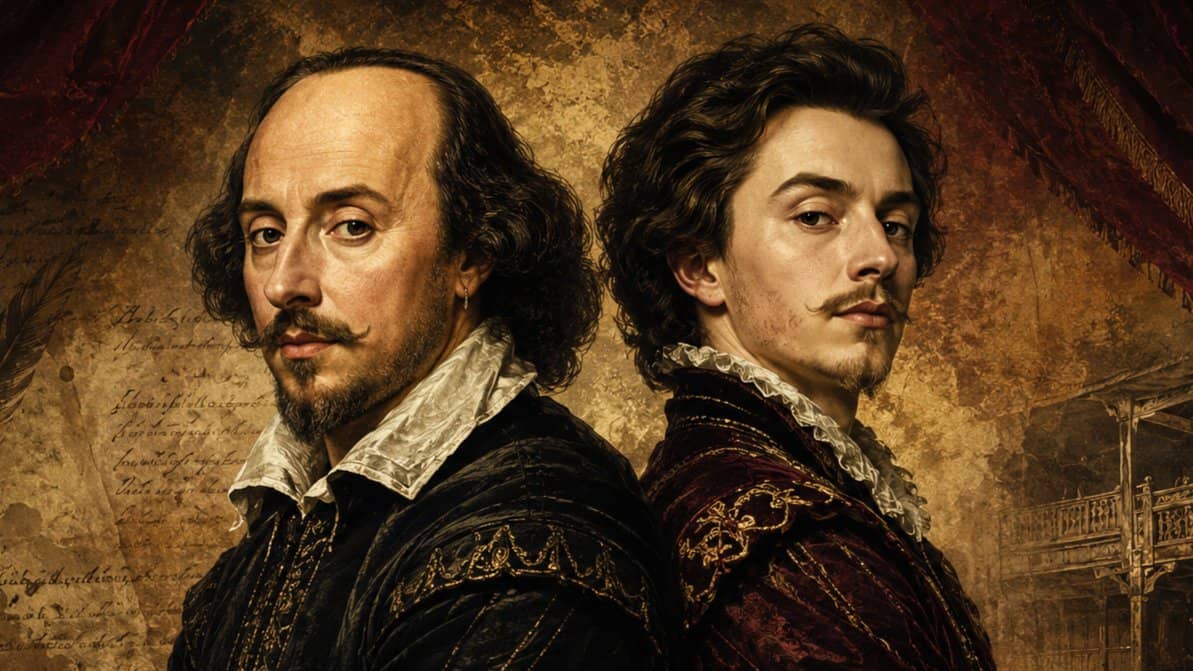
Shakespeare and Marlowe: Merchant of Venice (Play discussion)
About the event
Dear members,
This fall and winter, I offer that we broaden our understanding of Shakespeare by placing him in conversation with some of the remarkable writers who shared his stage —Ben Jonson, Thomas Kyd, John Webster. We’ll begin by examining his work in relation to a towering figure of his time —Christopher Marlowe. We take our first steps into what promises to be an edifying discussion with Shakespeare’s *The Merchant of Venice on September 5th,* followed by *Marlowe’s The Jew of Malta on October 3rd.* Read together, the plays open a rich conversation about outsiders, faith, money, prejudice, vengeance, and the uneasy moral worlds both playwrights engage.
Over the months that follow, we will continue this dialogue between Shakespeare and Marlowe through both drama and poetry. I’m excited! Hope that you like the idea! Maryama Antoine
Merchant of Venice Plot: Antonio, an antisemitic merchant, takes a loan from the Jew Shylock to help his friend to court Portia. Antonio can't repay the loan, and without mercy, Shylock demands a pound of his flesh. The heiress Portia, now the wife of Antonio's friend, dresses as a lawyer and saves Antonio.
About the play: It is believed that *The Merchant of Venice* was written between 1596 and 1598. It was most likely first performed at London’s second public playhouse, The Theatre, in 1598, as clergyman Francis Meres noted in his collection of essays. The first recorded performance at court was in 1605 by the King’s Men. It was also listed on the Stationer’s Register in 1598 and was published in quarto form in 1600 as The Most Excellent Historie of the Merchant of Venice. Its second reliable publication in 1623, in the First Folio, only differs in its addition of several stage directions and musical cues.
Sources: Many academics draw attention to anti-Semitic events and sentiments present in this era as the source for Shakespeare’s stimulus. In 1594, Elizabeth I’s Jewish doctor, Roderigo Lopez, was supposedly framed, falsely tried and brutally executed for attempting to poison the Queen. Harold Bloom sees a distinct connection between this event and Shakespeare’s play and even speculates that “Shakespeare was among the mob looking on” at the execution. Charles Edelman from Cambridge, however, says this is a complete myth, believing Lopez’ conviction had nothing to do with his Jewish faith and therefore could not have inspired Shakespeare’s play. Other sources claim that inspiration for the play might have come from Marlowe’s 1589 play The Jew of Malta, and some even suggest that Shakespeare had his own anti-Semitic beliefs. Closest to Shakespeare’s story, however, is Giovanni Fiorentino’s novella Il Pecorone (1558). It features the ‘Lady of Belmont’, a rich widow who tests her suitors, a Jewish moneylender who threatens the life of a Christian merchant, and the merchant’s rescue by his friend’s new wife disguised as a lawyer.
The Merchant of Venice is one of only two plays – Othello being the other – that Shakespeare set in Venice. It is probably no coincidence that these are the two (along with The Taming of the Shrew) that prove the most problematic for modern audiences and theatre companies because of the sensitivity around the issues they address, specifically in regards to racism and anti-Semitism.
During Shakespeare’s life Venice was, in many ways, the envy of Elizabethan Londoners. Venice was a rich marketplace where East meets West, considered the pinnacle of fashion, art, literature and architecture. But it was also something of an experiment. It was a thoroughly modern example of a society arranged around mercantile values; money, trading, commerce, and law, whereas the England that Shakespeare lived in was still built on traditional principles of faith and religion.