Flowers of Shanghai
Registration with the organizer
Registration and any payment happen on the organizer's website.
Go to registration on organizer website ↗Found by Moments · M+
Is this your event?About the event
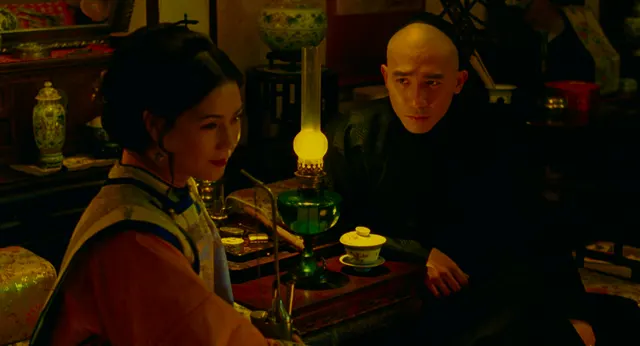
Based on Han Bangqing’s nineteenth-century novel The Sing-song Girls of Shanghai (translated by Eileen Chang), Flowers of Shanghai stands as one of Hou Hsiao-Hsien’s most iconic masterpieces. Serving as Hou’s first film set outside of Taiwan, this exquisite period drama takes place entirely within the opulent, enclosed ‘flower houses’ of late Qing Dynasty Shanghai. The narrative follows the intertwined romances, jealousies, and financial power plays of four courtesans and their wealthy patrons, all confined to a gilded cage that floats outside of time.
Eschewing conventional pacing, the film unfolds like a hypnotic riddle composed almost entirely of long, unbroken takes separated by slow fades to black. Cinematographer Mark Lee Ping-Bing masterfully embraces this spatial confinement; shot completely on indoor sets with no glimpse of the outside world, his camera forces the audience to breathe the same heavy, smoky air as the characters. Illuminated primarily by period-accurate oil lamps and candles, Lee’s slow, voyeuristic panning shots and rich amber hues transform these claustrophobic interiors into a dazzling, decadent living painting. This visual masterwork was nominated for the Palme d’Or at the Cannes Film Festival and won the Jury Award at the Taipei Golden Horse Awards. Hou Hsiao-Hsien (b. 1947, Guangdong) moved to Taiwan with his family soon after he was born. After completing his military service, he studied filmmaking at university. In 1973, Hou entered the film industry, serving as assistant director and in other positions. He made his directorial debut with Cute Girl (also known as Lovable You ) in 1980. Hou’s string of critical successes, including The Boys from Fengkuei (1983 ), The Time to Live and the Time to Die (1985), and Dust in the Wind (1986), made him one of the most notable names in Taiwan New Cinema. The award-winning A City of Sadness (1989) and The Puppetmaster (1993) cemented his status as a leading figure in world cinema. Hou’