Past event — This event ended 6 days ago.
Psychedelic Salon: From Outlaw to FDA-Approved
Registration with the organizer
Complete your actual registration on the organizer's website.
Found by Moments · Town Hall Seattle
Is this your event?About the event
LSD has traveled a strange arc in Seattle, from underground circles guided by charismatic true believers to its global leadership, conducting pharmaceutical clinical trials that are running right now in the Emerald City.
In this season-opening Salon, we trace that arc: the fascinating local history of LSD, the wildly improbable figure who moved it through Seattle’s past, and the rigorous science now positioning it as a potential FDA-approved treatment for generalized anxiety. But we also look forward to a near future in which shorter-acting synthetic analogs, streamlined clinical protocols, and a shrinking role for psychotherapists may push more people to navigate these experiences largely on their own.
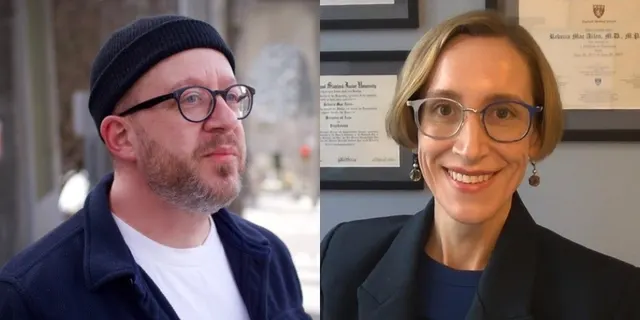
Author and historian Brad Holden opens the evening with highlights from his book Seattle Mystic, which details the life of Al Hubbard — inventor, bootlegger, spy, and the “Johnny Appleseed of LSD.” Hubbard was a Seattle native and was the first psychedelic enthusiast to emphasize the significance of a safe and supportive container, laying the groundwork for what would become known as “set and setting.”
Then we turn to the cutting edge: a conversation with Dr. Rebecca Allen, Director of Neuropsychiatry and Research at Seattle Neuropsychiatric Treatment Center, the Northwest’s leading clinic for treatment-resistant depression and other hard-to-treat psychiatric conditions like bipolar disorder, OCD, and PTSD. Seattle NTC is also one of the top 10 psychedelic clinical trial sites in the U.S. — based on the number of clinical trials and also the diversity of substances tested, including psilocybin, psilocybin analogs, DMT, LSD, and methylone.
This evening is an honest look at what the science shows, what it doesn’t, and what is gained and lost when a compound with a rich human history becomes a pharmaceutical product.