Discover the versatile oeuvre of Kees Verwey, one of the most important Dutch painters of the 20th century. An overview of his development as a painter.
Collection
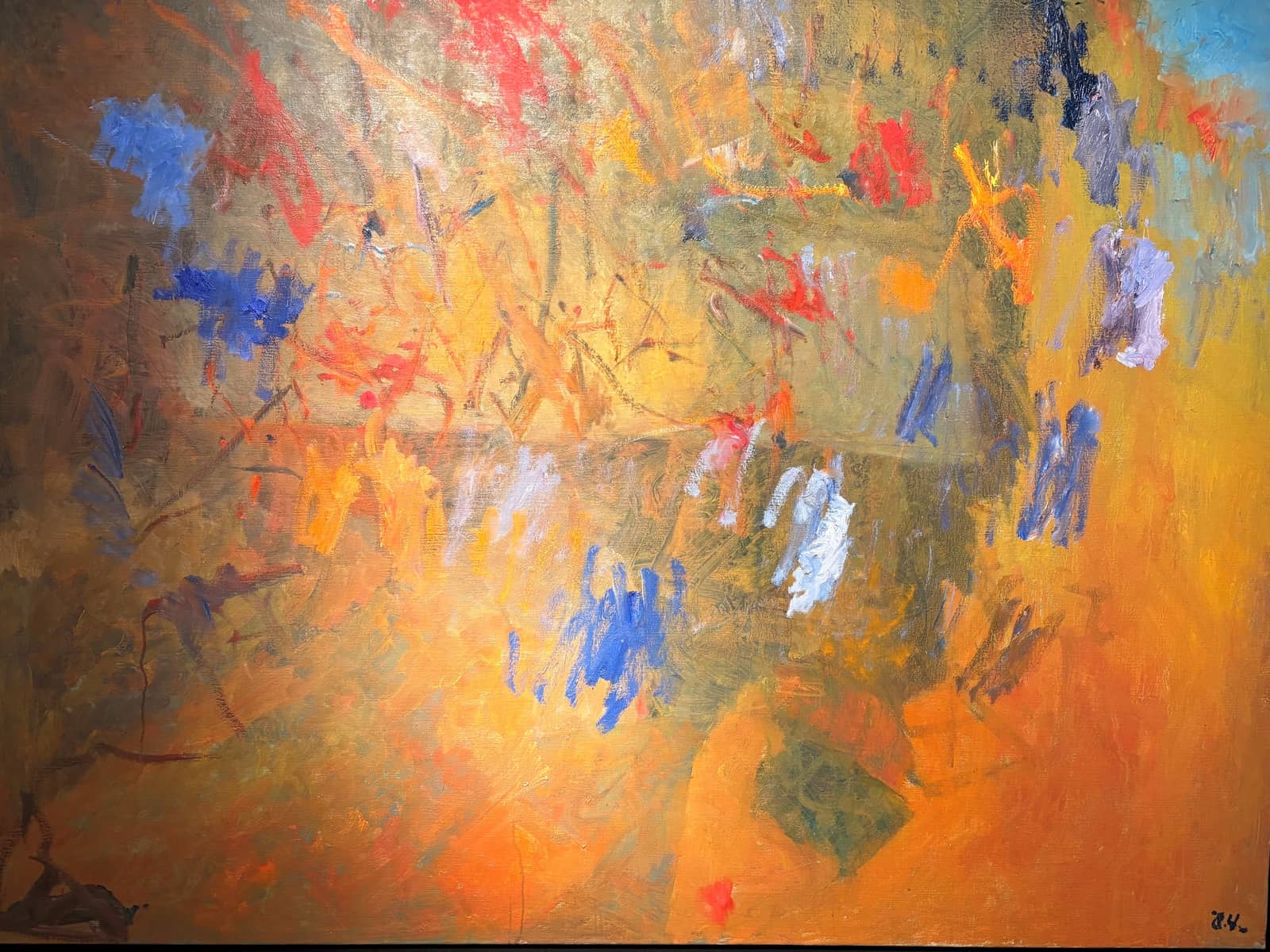
Kees Verwey (1900–1995) kept everything: from his first childhood drawings to his final works in his house on the Spaarne. It is precisely this large collection that makes it possible to follow his development as an artist up close. The depot of the Kees Verwey Foundation, which he founded, forms an inexhaustible source of inspiration. The new exhibition *Kees Verwey – A Lifetime as a Painter* traces Verwey's development from his early years to the masterpieces of his later work, in which his characteristic colorful and expressive painting style comes into full bloom.
Development
Kees Verwey is often regarded as a traditional artist, but throughout his life he made forays into innovations in his work. His much-admired teacher Henri Frédéric Boot (1877-1963) thoroughly taught him the art of 'traditional' painting. He also took great pleasure in following developments in the art world and gladly drew inspiration from artists such as Picasso, Matisse, and Bonnard, as well as Floris Verster, Karel Appel, Armando, and Peter Struycken.
Between tradition and innovation
An early example of such a foray is the painting * Beach at Zandvoort * from 1938, in which he was clearly inspired by the Impressionists. It was not until 1948 that Verwey dared to go further and surpassed his old teacher Boot. Throughout his life, Verwey wavered between tradition and innovation. *Ode to Bonnard* from 1984 is also a fine example of this. A constant in Verwey's oeuvre remains observation. With all changes in technique, viewpoint, or color, observation remains his great driving force. Thus, he experiences painting or drawing time and again as a new adventure. This starting point changes little or not at all over the years.